



© 2025 Aruba Intelligence - Quantum Quorum Media

ARUBA TOURIST CHANNEL
Your opinion matters
Share your view and help shape visitor experiences in Aruba.
Take the surveyARUBA TOURIST CHANNEL
Share your view and help shape visitor experiences in Aruba.
Take the survey

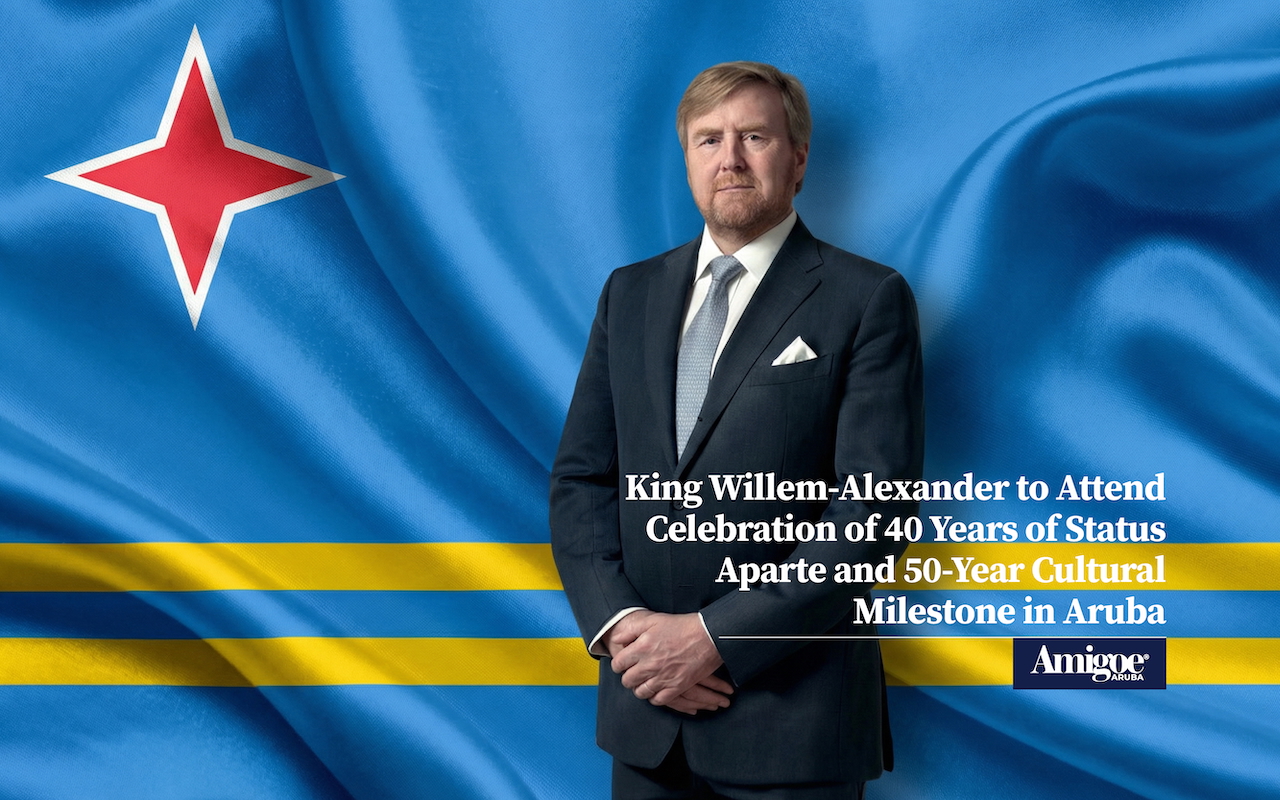
Aruba is marking a significant dual anniversary this year: 40 years of Status Aparte and a cultural commemoration that looks back to a historic event from 50 years ago. The celebrations gain additional significance with the presence of King Willem-Alexander, who will visit the island to take part in these milestones together with the Aruban community.
On January 1, 1986, Aruba obtained its so-called Status Aparte, granting the island an autonomous position within the Kingdom of the Netherlands, separate from the Netherlands Antilles. This constitutional reform represented a major step in Aruba’s political and administrative development.
The path toward this status was marked by a prolonged political process, in which the demand for greater self-governance played a central role. The commemoration of 40 years of Status Aparte is widely regarded as a moment to reflect on both the autonomy achieved and Aruba’s future position within the Kingdom.
The visit of King Willem-Alexander underscores the enduring relationship between Aruba and the Kingdom of the Netherlands. As head of state, the king fulfills a ceremonial role during national and Kingdom-wide commemorations. His presence at this celebration is seen as recognition of Aruba’s historical development and cultural identity.
King Willem-Alexander succeeded his mother, Queen Beatrix, in 2013. He inherited the monarchy within the existing constitutional structure of the Kingdom, in which Aruba has participated as a separate country since 1986.
A notable element of the celebration is the return of conductor Maybeline Arends, who will once again lead a choir symbolically connected to a performance from 50 years ago. This recreation of a historic moment highlights the continuity of Aruban cultural traditions.
According to organizers, this musical contribution serves as a bridge between generations, not only commemorating the past but actively celebrating Aruba’s cultural identity.
The celebrations on the island are expected to include a combination of official ceremonies, cultural performances, and public events. Attention will be given to both Aruba’s constitutional history and its cultural development.
The presence of representatives from the Kingdom, local authorities, and civil society organizations reflects the broad character of the commemoration. The organization aims for an inclusive approach that actively involves the community.
The commemoration of 40 years of Status Aparte is not only a moment of celebration, but also of evaluation. In policy circles, there is ongoing discussion about the need to further strengthen Aruba’s autonomy within the context of economic development, good governance, and international cooperation.
In addition, the cultural dimension of the celebration emphasizes the importance of heritage and identity in an increasingly globalized world.
The combination of a constitutional milestone and a cultural commemoration makes this celebration exceptional in Aruba’s recent history. With the presence of King Willem-Alexander and the symbolic return of Maybeline Arends, both the institutional and cultural connections between past and present are brought into focus.
The celebration therefore marks not only what Aruba has achieved, but also how the island continues to shape its identity within the Kingdom of the Netherlands.