


© 2025 Aruba Intelligence - Quantum Quorum Media


Iberostar Connects Tourism in Aruba with Community, Nature Conservation and Education
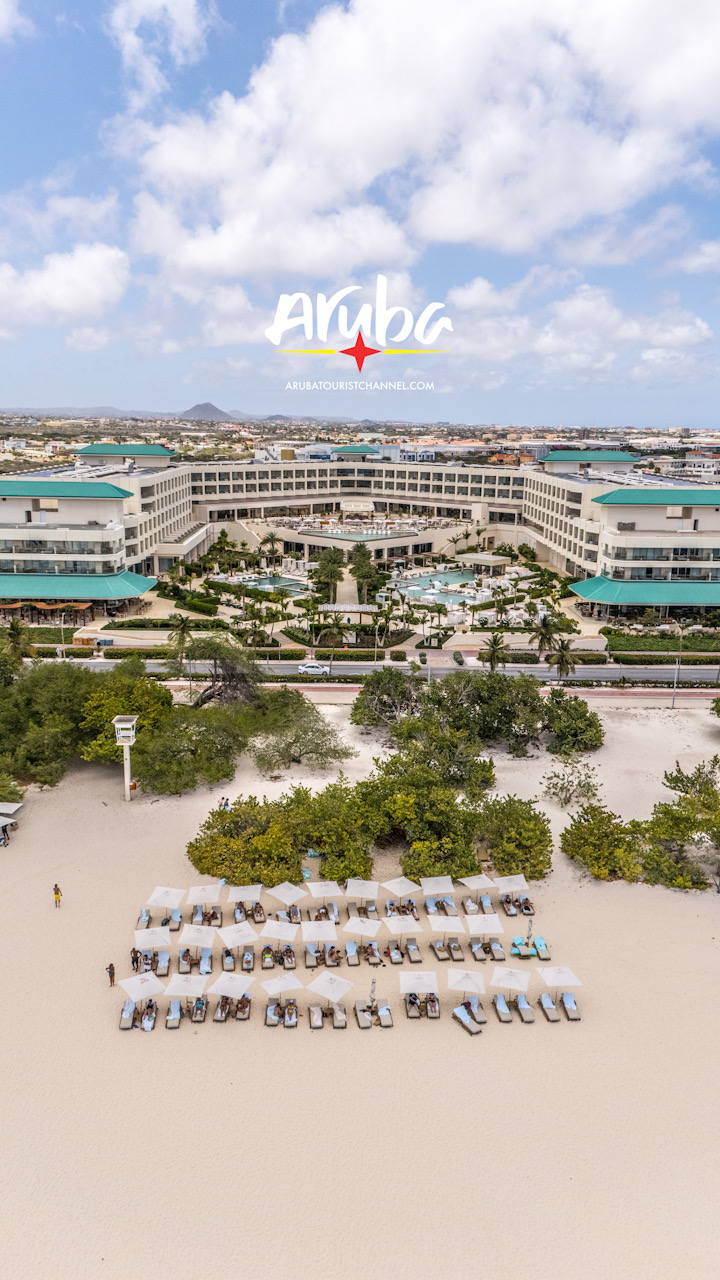
ORANJESTAD — Iberostar Hotels & Resorts is developing its presence in Aruba not merely as the operator of a luxury hotel and golf course, but increasingly as a long-term partner of the local community. Through JOIA Aruba by Iberostar and Tierra del Sol Golf Course, the international hotel group is connecting tourism development with education, local talent development, the circular economy and the protection of Aruba’s natural environment.
The approach forms part of Iberostar’s international Wave of Change strategy. Under this strategy, tourism is not assessed solely on the basis of hotel stays and financial returns, but also according to its impact on employees, local communities, coastal areas, biodiversity and future generations.
According to Iberostar, more than 460 employees are now involved in the group’s operations in Aruba. The company also works with educational institutions and community organisations to ensure that knowledge, experience and economic opportunities remain rooted on the island as much as possible.
Practical Experience for Aruban Students
An important part of Iberostar’s local approach is its cooperation with EPI, EPB and the University of Aruba. Through these institutions, more than forty students reportedly gained practical experience within the hospitality sector during the company’s first year of operations.
These internships are particularly relevant in an economy where tourism occupies a central position. Students are exposed not only to traditional hotel operations, but also to subjects such as food waste, environmental management, responsible purchasing, hospitality and sustainable business practices.
Education is therefore directly connected to Aruba’s future labour market. This is important for the island because sustainable development can only become credible when local young people possess the knowledge and skills required to eventually lead the tourism industry themselves.
Iberostar’s international sustainability reporting indicates that education and professional development are structural components of the company’s strategy. The group invests in internships, vocational education, digital training and partnerships with educational institutions.
The underlying principle is that new generations should not be regarded solely as future employees, but also as future managers, researchers and guardians of tourism destinations.
Aula di Lama as a Public Learning Environment
One of the most visible educational initiatives in Aruba is Aula di Lama, which can be translated as the classroom of the sea. Located at JOIA Aruba, the facility is available for educational activities and focuses on Aruba’s marine and coastal ecosystems.
According to figures released by Iberostar during JOIA Aruba’s first-anniversary celebrations, 145 sessions were organised during the first year, reaching approximately 1,290 participants. More than fifteen local non-governmental organisations reportedly contributed to the programme.
Aula di Lama is intended to be more than an information point for hotel guests. It was created as a meeting place for schools, students, researchers, environmental organisations, employees and other interested members of the Aruban community.
This open structure is significant. Nature conservation is not conducted exclusively behind the walls of a resort, but shared with the people who live on the island every day.
Local organisations can use the facility to share their knowledge about coastal areas, birds, marine life, waste management and climate change with a wider audience.
Cooperation with local experts also reduces the risk that international sustainability programmes become disconnected from the realities of the island.
Aruba’s environmental challenges require solutions that take account of its dry climate, limited available space, vulnerable coastal areas and strong economic dependence on tourism.
Protecting the Shoco
The protection of the Shoco, Aruba’s endemic subspecies of burrowing owl, is another important part of Iberostar’s activities on the island.
The so-called Shoco Boulevard was established at JOIA Aruba. This educational nature zone includes facilities intended to support the bird’s habitat while informing visitors about the importance of biodiversity. The project was developed in cooperation with Aruba Birdlife Conservation.
A Shoco Sanctuary is also located at Tierra del Sol. According to the golf course’s management, a considerable proportion of the known Shoco population lives within this protected area.
The protection of the native bird and its habitat was reportedly taken into account during the development and renovation of the property.
These initiatives are supported by the Shoco Ambassador Training programme. During a public training week held from October 27 to 31, 2025, almost 800 people reportedly participated, including more than 360 employees of JOIA Aruba and Tierra del Sol.
Employees from other hotels, University of Aruba students, representatives of local organisations and members of the media also took part.
In April 2026, Iberostar reported that the cumulative number of participants had surpassed 1,000. The company intends to expand the training programme further to include schools and the Aruba Airport Authority.
Nature conservation is therefore directly linked to education. Participants learn not only how to recognise the Shoco, but also about nesting areas, responsible behaviour around wildlife and the consequences of construction and human activity for the species.
Turning Waste into Resources for Agriculture
Iberostar’s community involvement also extends to waste management and local agriculture. The company works with Alto Vista Winery and other local partners on a system in which organic waste from the hospitality industry is converted into compost.
Food scraps and other organic material are therefore no longer treated solely as waste, but as a resource for agricultural production.
This reduces the amount of waste sent to landfill and contributes to the production of nutrient-rich compost for local crops.
For a small island, this circular approach is especially relevant. Aruba imports a large proportion of its food and has limited space available for waste processing.
Every waste stream that can be reused locally helps to reduce environmental pressure and dependence on imported resources.
JOIA Aruba’s official hotel information also refers to measures such as reducing single-use plastics, providing purified drinking water through refill stations and using renewable electricity.
These operational measures represent the less visible, everyday side of Iberostar’s sustainability strategy.
An International Strategy with Local Implementation
The projects in Aruba do not stand alone. Through its Wave of Change programme, Iberostar works internationally on the circular economy, climate action, responsibly sourced seafood, ecosystem restoration and cooperation with local communities.
In Jamaica, for example, the company supports a fish sanctuary that is jointly managed with local fishers, environmental organisations and government authorities.
The project includes coral restoration, the protection of seagrass and mangroves and the creation of local jobs directly linked to environmental conservation.
The United Nations Global Compact has presented this approach as a case study, while making clear that inclusion as a case study does not constitute formal endorsement of the company.
Nevertheless, the project illustrates how Iberostar seeks to integrate environmental management into its normal business operations and into the economic life of coastal communities.
The Iberostar Foundation, which has been active since 2004, focuses on three main areas: strengthening communities, connecting future generations with their natural surroundings and supporting scientific research into marine and coastal ecosystems.
More than Traditional Corporate Sponsorship
The initiatives in Aruba differ from traditional corporate sponsorship because they do not consist solely of one-time donations or public events.
Educational institutions, environmental organisations, employees and local businesses are directly involved in their implementation.
This does not mean that results based primarily on corporate statements should automatically be considered independently verified.
The published numbers of participants and beneficiaries were largely provided by Iberostar itself.
A complete long-term assessment would therefore require independent measurement of matters such as waste reduction, energy consumption, ecological development, local procurement and the actual career progression of interns.
Nevertheless, the structure of the projects demonstrates that Iberostar is attempting to place sustainability at the centre of its business model.
The combination of education, local employment, environmental research and cooperation with community organisations extends beyond a temporary marketing campaign.
Investing in the Generation That Will Manage Aruba’s Future
The ultimate significance of this approach lies with the next generation.
Hotels, beaches and natural areas can only be managed sustainably when young people understand why ecosystems require protection and, at the same time, have access to education and employment opportunities.
By offering students practical experience, involving schools in environmental education and making public spaces such as Aula di Lama available to the community, Iberostar is investing not only in today’s tourism economy, but also in the people who will lead that economy in the future.
For Aruba, this is an important development.
The island’s future cannot be built solely on more visitors or additional hotel rooms. It requires tourism that leaves behind knowledge, strengthens local communities and protects the natural assets on which the industry ultimately depends.
Iberostar’s activities demonstrate how an international hotel group can contribute to this process: not by replacing government, educational institutions or environmental organisations, but by acting as a partner that connects financial resources, infrastructure and international experience with local expertise.
When this approach is consistently maintained and its results are measured transparently, the Aruban model could become an example of tourism that does not simply make use of a destination, but actively invests in its people, its natural environment and its future.