



© 2025 Aruba Intelligence - Quantum Quorum Media

ARUBA TOURIST CHANNEL
Your opinion matters
Share your view and help shape visitor experiences in Aruba.
Take the surveyARUBA TOURIST CHANNEL
Share your view and help shape visitor experiences in Aruba.
Take the survey

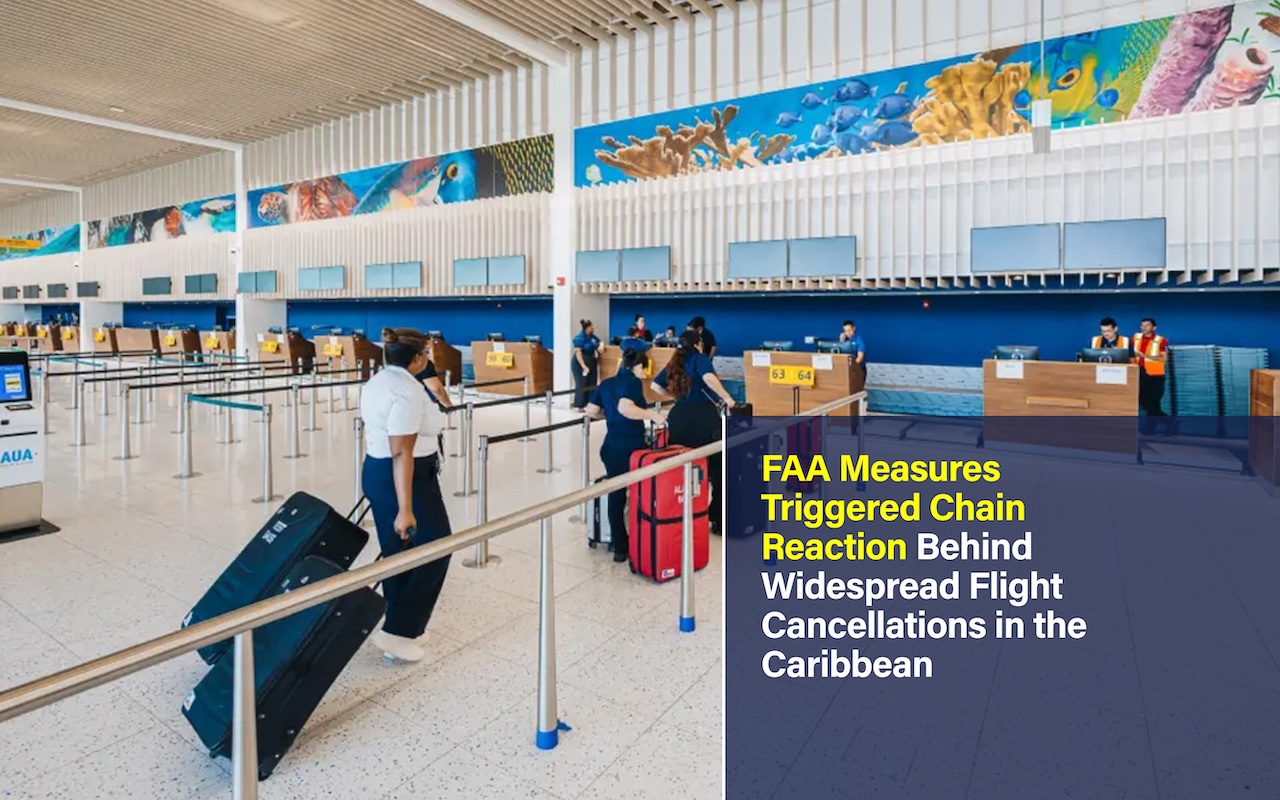
ORANJESTAD, Aruba — The recent large-scale flight cancellations across the Caribbean, including in Aruba, were not isolated decisions by individual airlines but the result of a chain reaction that began with safety measures imposed by the U.S. Federal Aviation Administration (FAA).
Following heightened tensions and military activity in and around Venezuela, the FAA issued emergency airspace measures in the form of NOTAMs (Notices to Airmen). These safety advisories temporarily restricted or prohibited the use of certain air corridors by U.S. airlines, as a precaution to ensure the safety of civilian flights.
Because U.S. airlines are legally required to comply with FAA directives, multiple carriers were forced to cancel or reroute flights, even when destinations were outside Venezuela. The impact extended well beyond U.S.-based routes.
Due to the interconnected nature of international flight schedules—shared aircraft, flight crews, connecting routes, and airport slots—this quickly led to a domino effect. Once primary routes were disrupted, regional and international connections were affected as well, including flights to and from Aruba.
Although the FAA measures formally apply only to U.S. carriers, non-U.S. airlines also chose to cancel or adjust flights as a precaution. These decisions were driven by safety considerations, operational uncertainty, and disruptions to international aviation networks on which they partially rely.
As a result, thousands of travelers across the Caribbean experienced cancellations, delays, and rebookings. Airports, including Queen Beatrix International Airport, were required to rapidly scale up operations with additional flights, adjusted passenger flows, and supplementary operational measures to clear backlogs.
While it may appear to passengers that airlines independently decide to cancel flights, this situation demonstrates that regulatory safety decisions by the FAA were the starting point of a broader chain reaction. The subsequent cancellations were largely the result of mandatory compliance with aviation safety requirements, not commercial choice.
Authorities and airline partners emphasize that these measures were taken with safety as the absolute priority, and that the restoration of normal flight schedules will proceed gradually once the airspace is deemed fully safe again.
#FAA #CaribbeanTravel #ArubaAirport #AviationSafety