



© 2025 Aruba Intelligence - Quantum Quorum Media

ARUBA TOURIST CHANNEL
Your opinion matters
Share your view and help shape visitor experiences in Aruba.
Take the surveyARUBA TOURIST CHANNEL
Share your view and help shape visitor experiences in Aruba.
Take the survey

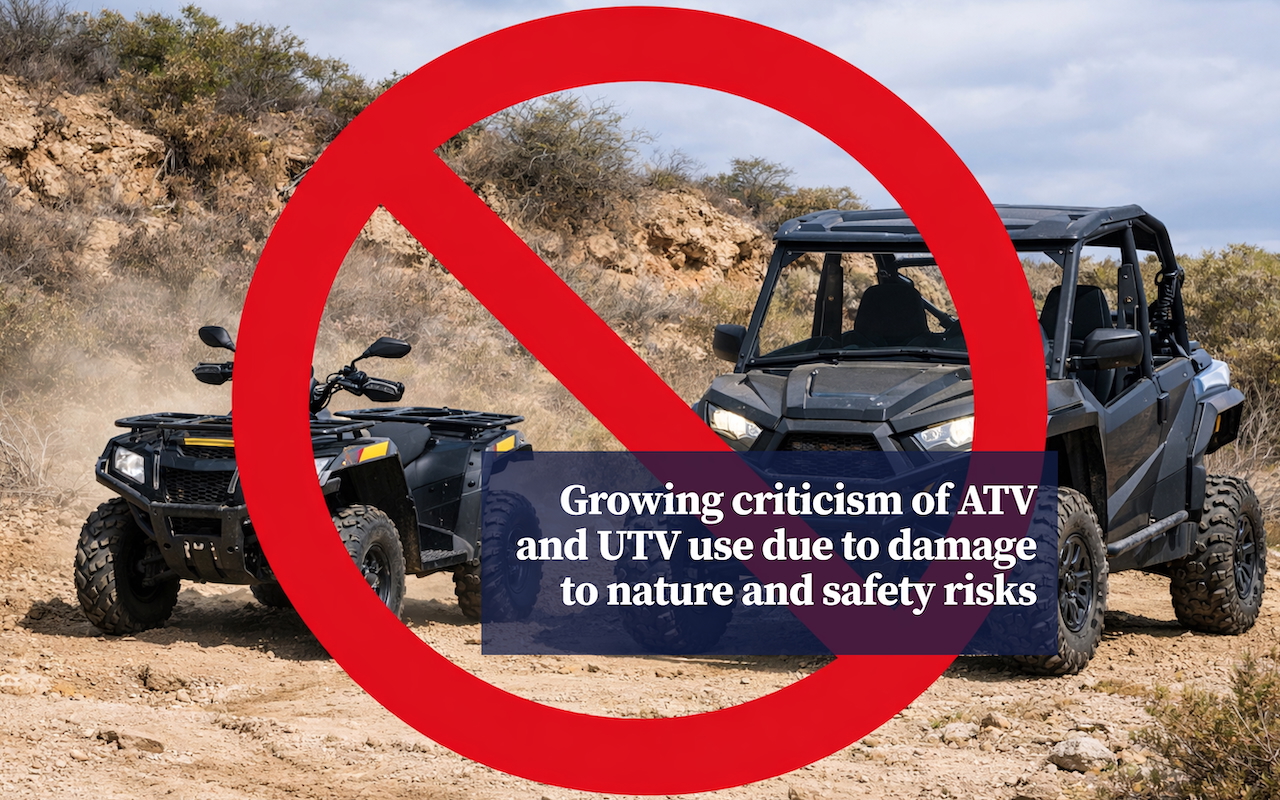
Oranjestad – The use of all-terrain vehicles (ATVs) and utility task vehicles (UTVs) in Aruba is facing increasing scrutiny following reports of environmental damage and a rise in accidents. Various observers and stakeholders argue that the negative effects of these activities outweigh their economic benefits and are calling for the active discouragement of their use.
ATV and UTV tours have grown significantly in popularity in recent years, particularly in natural areas in the northern part of the island. According to observations from environmental organizations and local authorities, this intensive use is contributing to the degradation of fragile ecosystems. This includes soil erosion, damage to vegetation, and disruption of natural habitats.
There are also indications that off-road activities may negatively affect native wildlife. Conservation observers note that nesting areas of owls in Aruba may be disturbed when vehicles enter sensitive terrain. This can result in damage to nesting sites and disruption of the breeding process, although the exact scale of this impact has not been fully quantified in all cases.
At the same time, there has been an increase in reported accidents involving ATVs and UTVs. These range from single-vehicle incidents to collisions in difficult terrain. Contributing factors include lack of user experience, insufficient adherence to safety regulations, and the use of these vehicles in prohibited or unsuitable areas.
Available information suggests that enforcement is, in some respects, insufficient and that existing regulations are not consistently followed. This raises concerns about the effectiveness of current oversight.
The use of ATVs and UTVs in Aruba falls under several legal frameworks, including traffic laws and environmental protection regulations. Authorities have repeatedly emphasized that protected natural areas are not freely accessible to motorized vehicles.
Within the current policy debate, questions are being raised as to whether existing regulations are sufficient to manage the identified risks. Considerations include stricter permitting requirements, improved oversight of rental operators, and the use of technological solutions such as geofencing to restrict access to sensitive areas.
While rental operators state that ATV and UTV tourism contributes economically, there is also growing recognition within the sector that current practices are under pressure. At the same time, critics argue that the structural damage to nature and the risks to safety are not adequately offset by economic gains.
From this perspective, several stakeholders explicitly recommend limiting or avoiding the use of ATVs and UTVs, particularly in environmentally sensitive areas. They argue that alternative, less invasive forms of tourism are more aligned with the island’s sustainability goals.
To the extent known, not all parties involved were available for comment.
The debate surrounding ATV and UTV use directly relates to Aruba’s positioning as a sustainable tourism destination. The preservation of nature and biodiversity is considered essential for the island’s long-term economic and ecological future.
Current developments are intensifying calls for stricter regulation and a reassessment of activities that place measurable pressure on the environment and public safety. In this context, the use of ATVs and UTVs is no longer regarded by some observers as compatible with a sustainable tourism model.
Future policy decisions will be decisive in determining the balance between economic interests and the protection of nature and society in Aruba.